Build a Swim Workout You Can Repeat and Improve
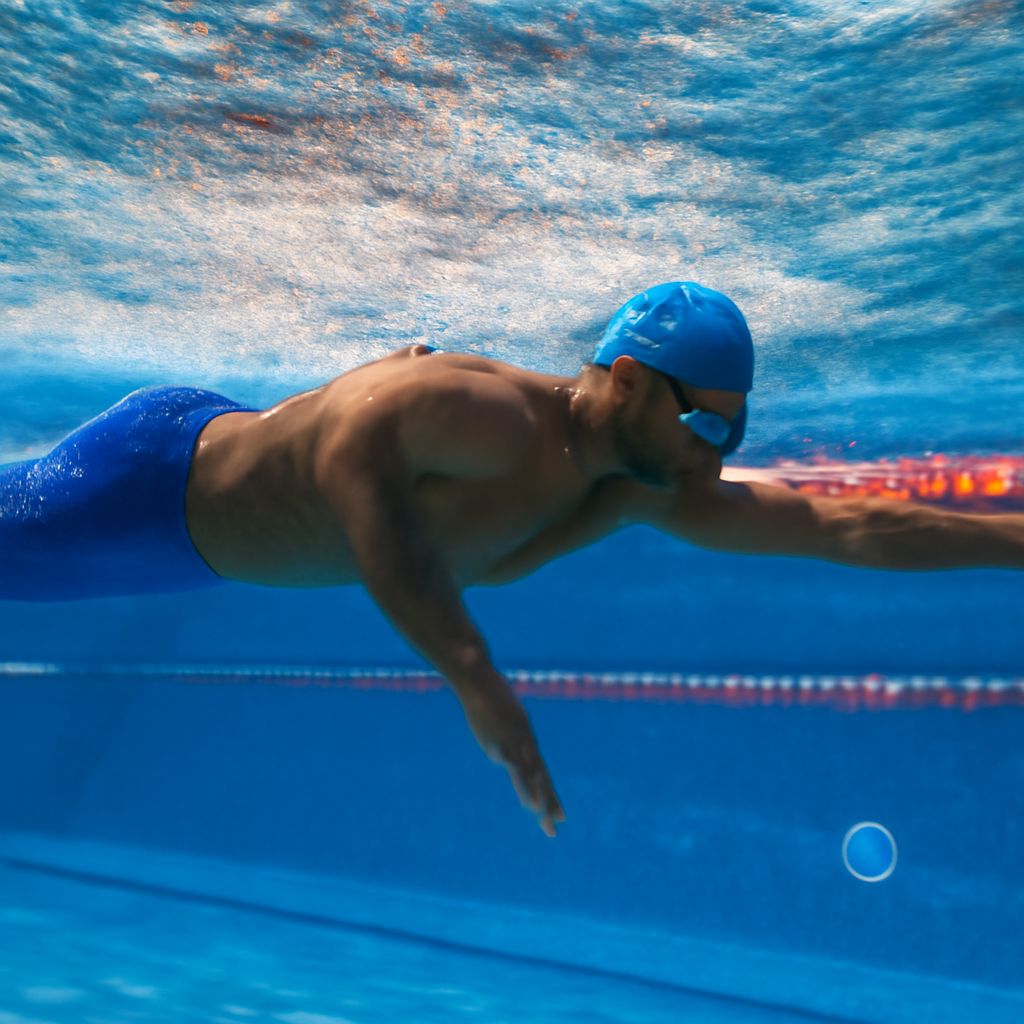
A common misconception is that a pool session only counts if you swim continuously until you are exhausted. In fact, a swimming workout can be built from short, purposeful lengths separated by rest. The pauses make it possible to practice a comfortable rhythm and repeat it while fatigue is still manageable.
Thoughtful exercises for swimming give each part of the session a job: prepare, practice, work and recover. Once those pieces fit together, distance and speed can change without turning every visit to the pool into a test.
Start with a distance you can control
A pool workout is easier to adjust when you know its units. In a 25-yard pool, one length is 25 yards and two lengths are 50 yards. A set is a group of repeats: 4 × 25 means four separate 25-yard swims, with the specified rest after each. Check your pool: some are measured in meters.
Choose a stroke you can swim comfortably, breathe regularly, and use the wall for rests. The session assumes you can swim at least one length safely. If that distance feels beyond reach, a lesson or supervised practice in a suitable area can help build the skills first. Stop for pain, dizziness, or unusual shortness of breath.
A manageable swim workout begins at an effort that leaves room to settle into the water. During the warm-up, swim slowly enough to notice how your breathing and movement feel. If an easy length feels unusually hard, reduce the day’s distance or allow longer rests.
Swim Exercises That Give Each Length a Purpose
The best swimming exercises depend on what you are ready to practice. Easy freestyle can develop a steady breathing rhythm; backstroke, if familiar, offers a change of position; gentle kicking can draw attention to the movement of your legs. Use a kickboard only if it feels comfortable, and keep the effort easy enough that your breathing stays controlled.
For a focused length, breathe out steadily into the water and turn to inhale as you normally would. These swim exercises are small pieces of practice, not a demand to perfect several skills at once. If a drill disrupts your breathing or makes a shoulder uncomfortable, return to a familiar stroke.
The most effective exercises in the pool are ones you can repeat with attention. Simple swimming exercises can be revisited as your endurance grows. A coach can observe your stroke and suggest a specific change if you are unsure why a movement feels awkward.
Try a 400-yard session
This sample swim workout uses a 25-yard pool. Rest at the wall after every repeat; the suggested pauses are a guide, so take longer if needed to regain comfortable breathing.
- Warm-up: 4 × 25 yards, 100 total. Swim easily, resting 20–30 seconds after each length. Pick a familiar stroke and let your rhythm settle.
- Practice: 4 × 25 yards, 100 total. Alternate one easy length focusing on a steady exhale with one easy length in your normal rhythm. Rest 20–30 seconds after each.
- Main set: 4 × 25 yards, 100 total. Swim at a moderate, controlled effort. Rest 30–45 seconds after each length. Aim to finish the fourth with a stroke and breathing pattern much like the first.
- Cool-down: 4 × 25 yards, 100 total. Slow down and use a comfortable stroke. Rest as needed between lengths before leaving the water.
If this swimming workout of 400 yards is too much today, do two repeats in each section for 200 yards. If your workouts in the pool already include comfortable 50-yard swims, pair two lengths in the main set and rest at the wall after each 50. Keep the total at 400 yards while you learn how the session feels.
Change effort and rest deliberately
Intensity describes how hard the work feels. On an easy length, breathing should settle quickly at the wall; at a moderate effort, you will breathe harder but should still be able to regain control before the next repeat. A swimming session at the same distance can feel very different depending on speed, experience and rest.
Rest is part of the design. Longer pauses give you more time to recover before another controlled effort; shorter pauses leave less recovery and make the set feel more continuous. For example, swim four lengths at the same moderate pace with 45 seconds of rest, then on another day try 30 seconds only if breathing and form remain controlled.
Good swim workouts leave enough capacity for a comfortable cool-down. Well-paced workouts in the pool make the final lengths feel unhurried. Easy movement after the main work provides a transition toward rest and a moment to notice how your body feels. Drink water afterward, and allow time between pool sessions if your shoulders or legs are still tired.
Make progress you can observe
A swimming training plan can begin with one or two sessions a week, leaving recovery time between them. Repeat a session until its distance and rest feel manageable, then add one or two lengths to the main set while keeping the pace easy to control. Another approach is to keep the distance fixed and shorten rest slightly; choose one change at a time.
A plan for swim training works best when it fits the week you actually have. A training plan for swimming can also accommodate shorter visits by keeping each phase and reducing the repeats. Note the distance, rest and how the last repeat felt. Use them to decide whether to repeat the work or add more.
Among the best exercises for swimming are the familiar movements you can perform smoothly as the set goes on. Watch for a specific sign that the workload has outgrown that control: if you begin lifting your head to gasp and cannot settle your breathing during the planned rest, stop at the wall. On the next session, slow the repeats and extend the rest, or cut each repeat to one length; build back only when your breathing stays steady through the final one.