Mango Nutritional Value: What Is in a Cup of Fruit?
How much nutrition is in the mango you actually eat? A cup of fresh mango pieces, without the skin or pit, provides about 99 calories, 25 grams of carbohydrate and 2.6 grams of fiber. The nutritional value of a mango depends on the amount of flesh cut from around its large pit, so measuring the pieces gives a more useful estimate than weighing the whole fruit.
Nutritional value of mango: Start with the edible portion
A whole mango includes a large, flat pit as well as skin. The amount of flesh varies with the fruit’s size and the way it is cut. One cup of fresh pieces is a convenient reference serving, but a particular mango may yield more or less than that. Weigh the cut flesh or measure it in a cup if you want to compare your portion with a food record.
The USDA FoodData Central entry for raw mango gives the following estimates. One cup of pieces weighs about 165 grams, or 5.8 ounces. Values are rounded and refer to the edible flesh, not the pit or peel.
| Nutrient | About 1 cup of pieces |
|---|---|
| Calories | 99 |
| Carbohydrate | 24.7 g |
| Fiber | 2.6 g |
| Total sugars | 22.5 g |
| Protein | 1.4 g |
| Fat | 0.6 g |
| Vitamin C | 60 mg |
| Folate | 71 mcg |
Mango nutritional value changes in proportion to the amount eaten: half a cup supplies roughly half the amounts listed. The numbers are averages, and an individual fruit may differ. A measuring cup is practical for everyday use; a scale gives a closer estimate when the pieces are large or irregularly shaped.
Carbohydrate, sugar and fiber
Most of the energy in fresh mango comes from carbohydrate, including naturally occurring sugars. The fruit’s sweetness makes those sugars noticeable, but the useful number for someone tracking carbohydrate is the total: about 25 grams in the reference cup. Fiber is included in that total rather than added on top of it.
Dietary fiber is plant material that is not fully digested in the small intestine. It supports digestive health and contributes to the texture of the whole fruit. The 2.6 grams in a cup of mango can contribute alongside fiber from beans, whole grains, vegetables and other fruit across the day. The nutritional value of mango is easier to place in context when the rest of the meal is visible too.
For a smaller carbohydrate portion, put half a cup of cut fruit in a bowl and save the remainder for another meal. Add plain yogurt or cottage cheese if you want more protein. Nuts or seeds can add fat and texture. The nutritional value in fresh mango is mostly carbohydrate, so these companions change the overall balance of the snack.
Vitamins in a serving
One cup provides about 60 milligrams of vitamin C. The body uses vitamin C to make collagen, a structural protein in skin and other tissues, and to help absorb iron from plant foods. Mango also supplies folate, a vitamin involved in making DNA and supporting cell division. These contributions add to the nutritional value of fresh mango within a varied diet.
The fruit contains carotenoids, pigments that give the flesh its yellow-orange color; some can be converted into vitamin A by the body. Color and nutrient levels vary among varieties, so a deeper color does not provide an exact vitamin measurement for the fruit in your kitchen. Among the nutrition facts mango shoppers compare, calories and carbohydrate depend on whether the fruit is fresh, dried or prepared in another form.
Fresh and dried mango on the plate
Drying removes water, concentrating the remaining food into a smaller, lighter piece. A small handful of dried mango can therefore contain more fruit and carbohydrate than its size suggests. Fresh pieces contain more water and occupy more space for the same amount of dried fruit’s original flesh. Both can fit into a meal; the portion and product determine the contribution.
Some dried mango has sugar added during processing. Check the ingredient list and the Nutrition Facts label for serving size and added sugars, then compare the amount you actually eat with that serving. Unsweetened dried fruit still contains the fruit’s naturally occurring sugars. If you add it to oatmeal or trail mix, include it as part of the whole bowl rather than treating its small volume as negligible.
For mangoes, nutrition facts are most helpful when they match the food being eaten. The mango nutrition data in the table describe fresh fruit, not a dried product, juice or sweetened purée. A packaged product’s label is the better source for its specific ingredients and serving size. Mangoes’ nutritional facts can differ noticeably once water or sugar is added or removed.
Make the numbers work for your meal
Fresh mango can be a snack on its own, a topping for plain yogurt or an addition to a savory salad with beans and greens. In each case the fruit contributes carbohydrate and vitamin C, while the other ingredients change the meal’s protein, fat and fiber. For comparing meals, use the nutrition information for mango in the form and amount you served.
If you buy pre-cut fruit, check whether it is plain or packed with syrup. Syrup contributes additional sugar and changes the calculation. For frozen fruit, look at the ingredient list and label to see whether sugar has been added. These details make the nutritional information for mango more specific than a generic figure for a whole fruit.
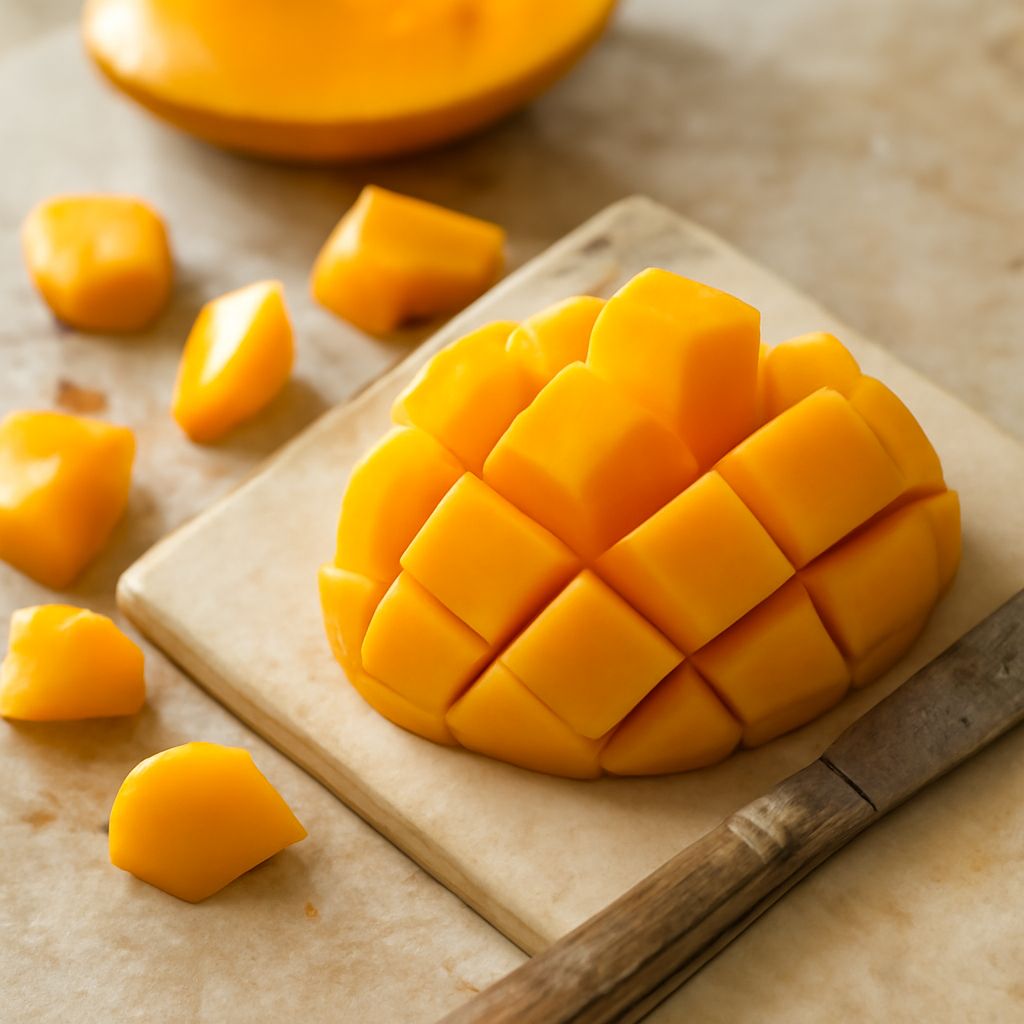
Mango nutritional value can be estimated without perfect cuts. Slice the flesh away from the flat pit, remove the skin, and collect the pieces you plan to eat. Place them in a measuring cup: roughly one cup corresponds to the table above, while half a cup corresponds to about half its figures. Save any extra pieces separately, and use a kitchen scale if you want a more precise portion.