DIY Protein Treatment for Natural Hair: Recipes That Work
Protein treatments strengthen hair by temporarily filling gaps in the cuticle and cortex caused by chemical processing, heat damage, or mechanical stress. A diy protein treatment for natural hair using kitchen ingredients can be just as effective as salon treatments for mild to moderate damage—at a fraction of the cost. A homemade protein hair mask built from eggs, Greek yogurt, or gelatin delivers hydrolyzed protein small enough to partially penetrate the hair shaft. A diy protein treatment done monthly maintains structural integrity and reduces breakage between washes. A homemade protein treatment for natural hair also lets you control the concentration—lower protein content for mild strengthening, higher for repair after significant damage. Any homemade protein treatment should be followed by a deep conditioning session, because protein without moisture creates brittle, stiff hair.
Why hair needs protein
Hair is composed primarily of keratin, a structural protein. Chemical processes (relaxers, color, bleach) break disulfide bonds in keratin, weakening the hair shaft. Heat damage from flat irons and blow dryers at high temperatures causes similar degradation. Environmental exposure—UV radiation, hard water, and low humidity—strips protein gradually over time. The signs of protein-deficient hair: excessive stretch before breaking (hair feels mushy when wet), increased breakage on combing, limpness, and loss of definition in natural curl patterns. A protein treatment temporarily reinforces the shaft until new protein bonds form during the regrowth cycle.
Basic egg protein mask
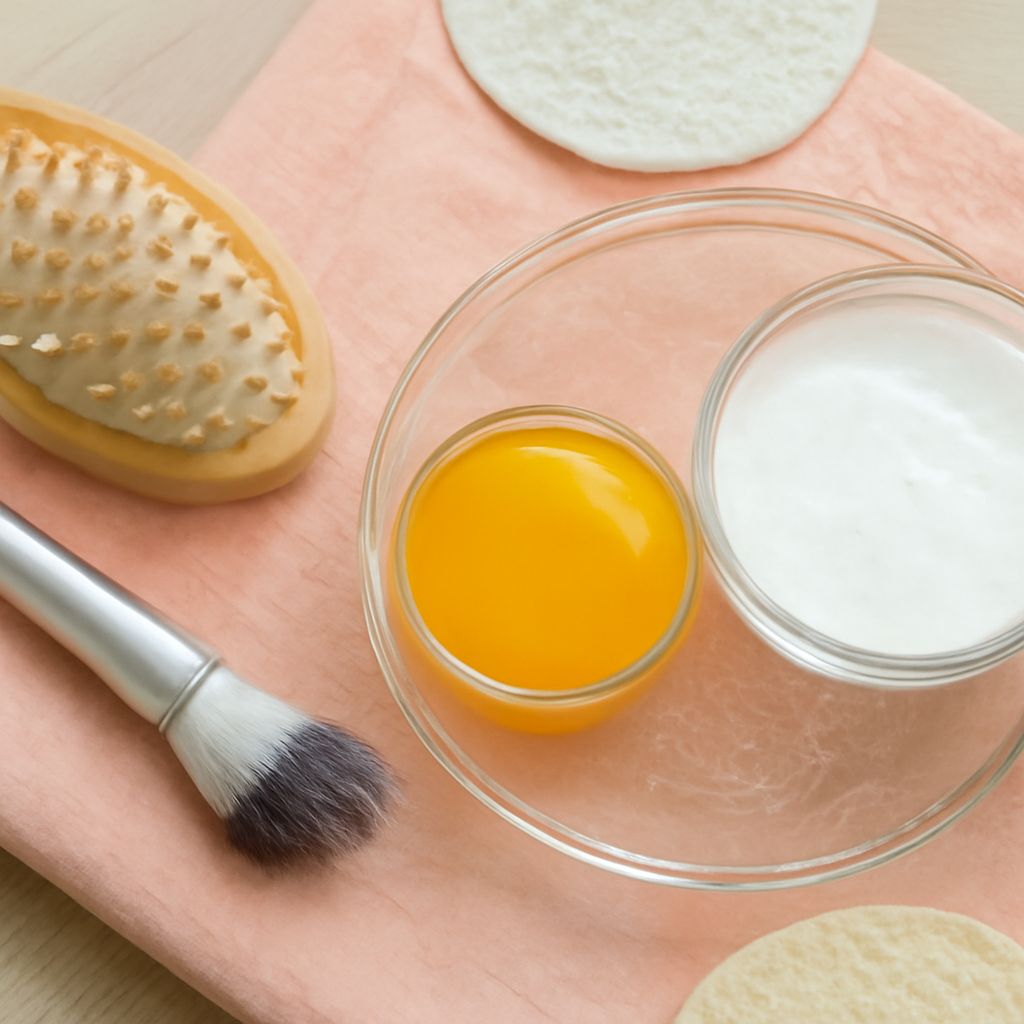
Two whole eggs provide both protein (from the white) and fat (from the yolk) for a balanced treatment. Whisk two eggs with one tablespoon of olive oil and one tablespoon of honey. Apply to clean, damp hair from root to tip. Cover with a plastic cap and leave for 20 to 30 minutes—no heat required. Rinse with cool water first (warm water will cook the egg and make it difficult to rinse), then shampoo out completely. The egg proteins coat the hair shaft and temporarily harden the cuticle, reducing porosity and breakage. This homemade protein hair mask works best for fine to medium hair that needs light strengthening.
Greek yogurt and honey mask
Half a cup of plain full-fat Greek yogurt contains lactic acid (which opens the cuticle for better penetration) and protein from milk. Mix with one tablespoon of honey and one teaspoon of coconut oil. Apply to damp hair, focusing on mid-lengths and ends where damage is highest. Leave for 25 to 35 minutes under a shower cap. Rinse with lukewarm water, then shampoo and deep condition. Greek yogurt-based homemade protein treatment for natural hair is particularly effective for curly and coily textures because the lactic acid smooths the cuticle while the protein fills gaps, improving curl definition and reducing frizz.
Gelatin protein treatment
Unflavored gelatin is a concentrated source of collagen-derived protein with small enough molecules to partially penetrate the hair shaft rather than just coating it. Dissolve one tablespoon of unflavored gelatin in half a cup of warm water and let it cool slightly until it forms a thin gel (not fully set). Mix in one teaspoon of apple cider vinegar and one teaspoon of any lightweight oil. Apply to damp hair in sections, working from root to tip. Leave for 20 minutes under a plastic cap. Rinse with cool water, then condition thoroughly. This diy protein treatment produces noticeably harder, more resilient hair texture that softens within a day or two as moisture is reintroduced.
Frequency and moisture balance
Protein treatments should not be done more than once every three to four weeks on most hair types. Over-proteining produces the opposite of the desired effect: hair becomes stiff, dry, and increasingly prone to snapping. After every protein treatment, deep condition with a moisture-rich mask for 30 to 45 minutes. Signs you’ve over-proteined: hair that breaks with almost no stretch, straw-like texture, increased shedding. If this happens, skip protein entirely and focus on moisture-only treatments for two to four weeks until the balance is restored. Low-porosity hair (hair that repels water) needs protein less frequently than high-porosity hair (hair that absorbs water quickly but loses moisture fast).
Bottom line: A diy protein treatment for natural hair using eggs, Greek yogurt, or gelatin delivers real structural benefits for mild to moderate damage at minimal cost. Every protein treatment must be followed by deep conditioning to prevent brittleness. Monthly application maintains hair integrity between salon visits without the expense of professional treatments.
Related Posts
Oh Yeah Protein: A Comprehensive Guide
37 Calorie Brownies: A Deliciously Healthy Treat