Thick Exercise Mats: How to Choose Your Surface
How much cushioning do you need for a comfortable workout? That depends on what you do on the mat: a padded exercise surface can soften floor contact, while a firmer one may feel steadier for standing balance. The right training mat also needs enough space, grip and storage for your routine.
Best workout mat features depend on the activity
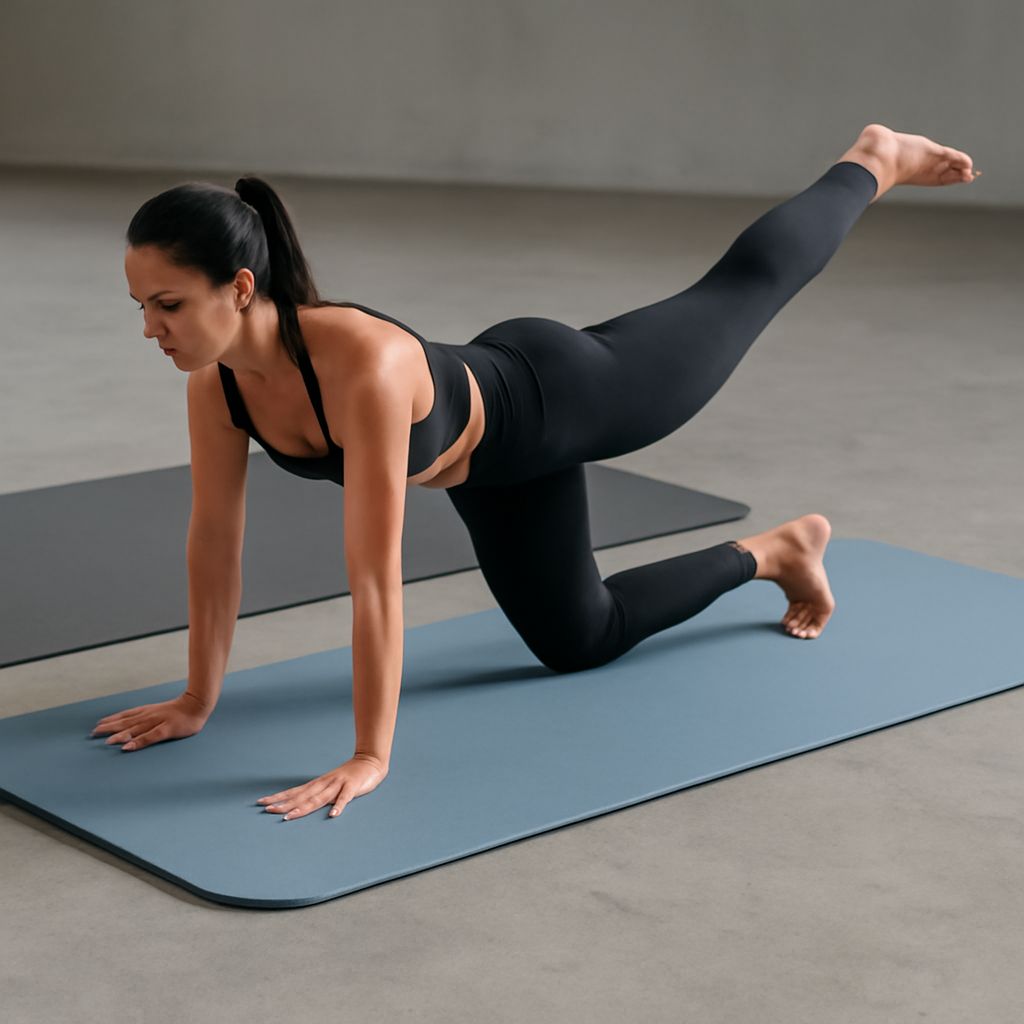
Start by listing the movements you actually do. Floor exercises place knees, hips or the spine against the surface; standing exercises depend more on stable footing. A single mat can serve both, but the compromise between softness and stability will feel different to each person.
Thick exercise mats are often appealing for stretching, Pilates and other floor work. Extra padding can make a hard floor less noticeable under pressure points. For a balance pose or a standing strength movement, however, a very soft surface may compress unevenly beneath your feet. REI’s mat guide notes this tradeoff for standing poses.
If your sessions mix both kinds of movement, try a moderately cushioned, firm mat and add a folded towel under the knees when needed. Another option is to step onto the bare floor for standing work, provided the floor itself gives you a secure surface. Keep the transition area clear so you do not catch a foot on the edge.
Thickness and firmness are different
A label may describe a mat as thick, but thickness alone does not tell you how far it compresses. A dense foam pad can feel firmer than a softer one of the same depth. Press the surface with your hand if you can inspect it, and consider whether you want to feel the floor beneath it during the movements you practice.
As a starting comparison, a mat around 1/4 inch thick can offer a mix of cushioning and floor contact; options around 1/2 inch provide more material between you and the floor but may feel less stable. These are examples, not fixed rules: density and construction change the feel. A thick exercise mat that supports your knees comfortably may still be too yielding for a single-leg balance exercise.
A thick workout mat can also be useful for seated or supine movements, where the body rests against the floor. Check whether it returns to shape after pressure and whether the surface bunches when you move. If you feel the hard floor through a soft pad, a firmer material may be more useful than simply choosing a deeper one.
Measure the space you need
Length matters when you lie down; width matters when you extend your arms or move from side to side. Measure your height and the floor area available, then compare both with the product dimensions. Leave clearance around furniture and walls for the full movement, not just the mat itself.
An extra large exercise mat can create a wider work area for lateral steps or a mix of floor exercises. Its rolled diameter and weight may also make it harder to carry or store. If you train in a small room, mark the dimensions on the floor before ordering and check that the mat can lie flat without curling against a wall.
Consider movement direction as well as body size. A narrow pad may be long enough for a stretch but leave your hands off the edges during a plank. For a routine with side lunges, the useful area may extend beyond the mat; make sure the surrounding floor is appropriate for the movement too.
Check grip on both sides
A mat has two surfaces to evaluate: your hands or feet need traction on top, and the underside needs to stay in place on your floor. Texture and material influence grip, but a surface that feels secure when dry may behave differently with sweat. If a store permits, test a simple downward press with your hands and a controlled standing shift. Stop using a surface that slides or bunches.
Shoes add another variable. Some padded fitness mats are intended for barefoot use and may wear quickly under footwear. If you plan to exercise in shoes, look for a surface the manufacturer describes as suitable for them. Wipe the mat using its care instructions and let it dry fully; cleaners can affect some materials, and moisture under a mat can make the floor slippery.
Equipment and storage
A soft floor-work pad is different from flooring designed for heavy equipment. Dumbbell edges, bench legs and repeated impacts can dent or tear a light foam mat. For machines or weights, check the equipment manufacturer’s flooring requirements and the mat’s stated load and use; dedicated protective flooring may be more appropriate. A mat alone cannot promise that a floor will be protected from dropped weights.
A more cushioned workout mat may also take up more room when rolled. Before buying, check rolled dimensions, weight and whether it has a strap or folding design. If you carry it to class, test whether it fits your bag or is comfortable to hold. At home, a bulky roll needs a dry place where it can be stored without being crushed.
Materials differ in feel, cleaning requirements and durability. Compare the manufacturer’s care directions and product information rather than assuming a particular material always grips best. If you have a material sensitivity, check the composition before buying.
Choose for your routine
For mostly floor-based stretching on a hard surface, prioritize cushioning and enough length to lie comfortably; a thicker training pad is a reasonable place to start. For standing yoga or balance work, choose a firmer mat with dependable grip and add a towel for occasional kneeling. If your workout includes shoes or equipment, check the intended use and durability first. The best workout mat for your routine supports your actual movements and fits the space where you will use and store it.
Related Posts
How to Use a Custom Workout Plan Without Guesswork

Best Workout Apps to Boost Your Fitness Routine