Cottage Cheese Nutrition: What a Serving Can Tell You
What does a serving of cottage cheese contribute to a meal? It offers protein alongside fat, carbohydrate, and minerals, but the amounts depend on the product and portion. The nutritional profile of cottage cheese changes with milkfat, added salt, and other ingredients, so the package is the best guide to what you are eating.
A closer look at cottage cheese’s nutrition also makes a useful distinction: a food can contribute one nutrient generously while providing less of another. The rest of the meal matters too, as do your preferences and the amount you actually serve.
Nutritional value of cottage cheese in a defined portion
For a concrete reference, the USDA National Nutrient Database, Standard Reference Release 28 lists an estimated composition for low-fat cottage cheese made with 1% milkfat and no sodium added. For 100 grams, or about 3.5 ounces, the entry reports:
| Nutrient | Amount per 100 g |
|---|---|
| Energy | 72 calories |
| Protein | 12.4 g |
| Total fat | 1.0 g |
| Carbohydrate | 2.7 g |
| Calcium | 61 mg |
| Sodium | 13 mg |
The entry is an example of cottage cheese nutrition, not a label for every tub. In particular, its no-sodium-added formulation should not be treated as typical of salted versions. The database identifies these figures as estimates, and the nutrition in cottage cheese on your shelf can differ with the recipe and manufacturer.
Protein helps build and maintain body tissues. Carbohydrate supplies energy, while fat contributes energy and affects the food’s texture and flavor. The nutrition facts for cottage cheese also include calcium, a mineral involved in bone health and other body functions. A serving contributes to a day’s intake; it need not meet every nutritional need on its own.
Why the package changes the picture
The nutritional value of cottage cheese depends partly on how much cream is included. A higher-fat variety generally supplies more fat and calories for an equal weight than a comparable lower-fat variety, although recipes differ. Check saturated fat as well as total fat if that is a priority for you. A creamier product may be appealing in a small bowl; a lower-fat option may better suit a different calorie budget.
Salt affects flavor and preservation, and sodium deserves its own line in a comparison. The nutrition facts on cottage cheese show sodium in milligrams and as a percentage of the Daily Value. That percentage provides context for one labeled serving within a day’s diet. The no-sodium-added example above contains naturally occurring sodium; the phrase does not mean sodium-free. A regular salted product can have substantially more, so read the number rather than relying on the front of the tub.
Brands may also add fruit, sweeteners, thickeners, or other ingredients. These can change taste and texture as well as the numbers. Check total and added sugars separately when comparing a flavored product with a plain one: total sugars include sugars naturally present in milk, whereas added sugars identify those introduced during processing. Ingredient lists help explain why two products with similar names are not identical.
Compare portions before comparing numbers
When comparing nutrition facts, cottage cheese labels can appear to tell different stories simply because their serving sizes differ. Start with the weight in grams next to the household measure. If one tub gives values for 100 grams and another for 200 grams, divide the second set of values by two to compare equal weights. To estimate what you eat, multiply each label value by your portion weight divided by the label’s serving weight.
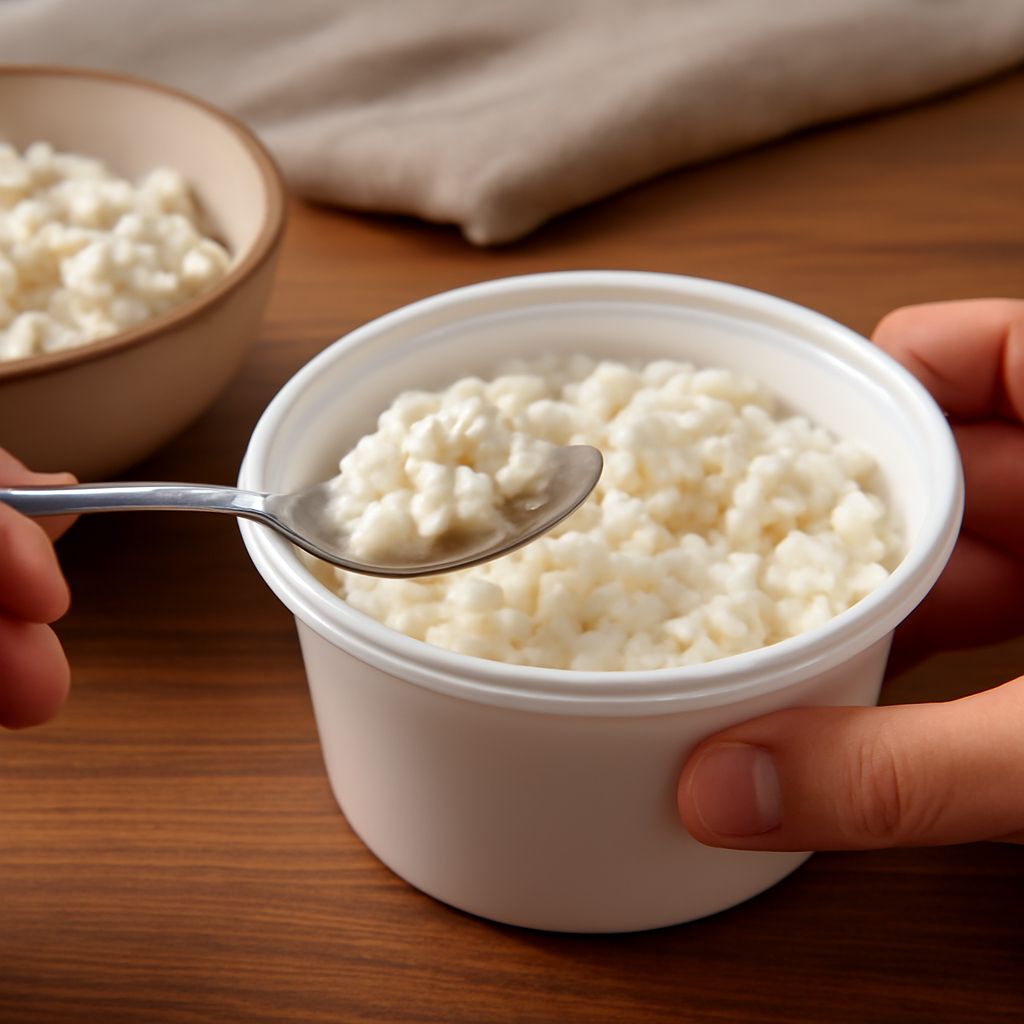
For instance, a portion equal to one and a half labeled servings supplies approximately one and a half times the listed calories, protein, and sodium. Package values are rounded, so the result is an estimate. If your usual scoop is larger than the pictured serving, it changes the contribution to your meal even though the food itself has not changed.
This approach puts the nutritional benefits of cottage cheese in context. Protein may be your first filter, but an equally sized serving’s sodium, saturated fat, calories, and price can affect the choice. If you track intake, use the label of the actual product and a measured portion for a more relevant estimate than a generic database entry.
Make it part of a varied meal
Cottage cheese nutrition becomes more meaningful when considered alongside the foods served with it. Pair a plain version with berries and oats for fruit and grain, or spread it on toast and add sliced tomatoes. A savory bowl with cucumber, herbs, and beans adds texture and variety; use the package’s sodium figure to decide whether additional seasoning is needed.
A serving’s nutritional value also matters in warm dishes. Stir it into cooked pasta or spoon it onto a baked potato, adding vegetables and other ingredients you enjoy. Heating may change its texture, and the finished meal’s nutrients reflect every ingredient and the amount used. For a portable lunch, keep the dairy chilled with the rest of the perishable food until eating.
People who have trouble digesting lactose may prefer a lactose-free version; check the label for that claim. Someone with a milk allergy needs to avoid milk proteins, even in a lactose-free product. These are different concerns, so choose according to your own needs.
A practical label check
The nutritional content of cottage cheese is easiest to compare when both packages are expressed in the same weight. Choose the portion you expect to eat, scale each label to that amount, and place calories, protein, sodium, and saturated fat side by side. Then decide which differences matter to you, along with flavor and cost. That small calculation turns cottage cheese nutrition from an abstract number into a choice suited to your meal.
Related Posts
Beef Jerky Nutrition Facts: What a Serving Contains
Understanding USDA Beef Grades