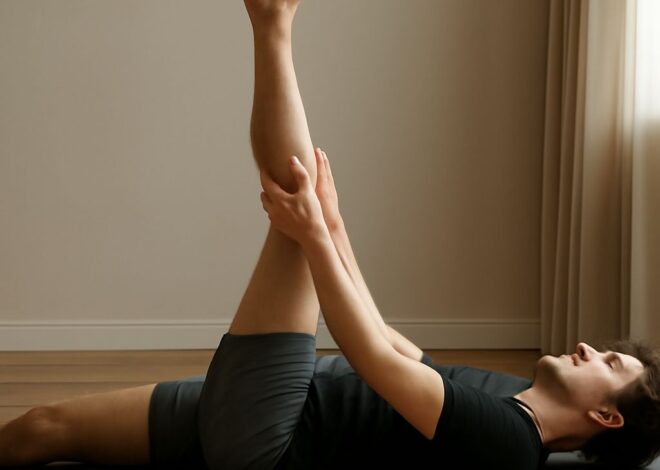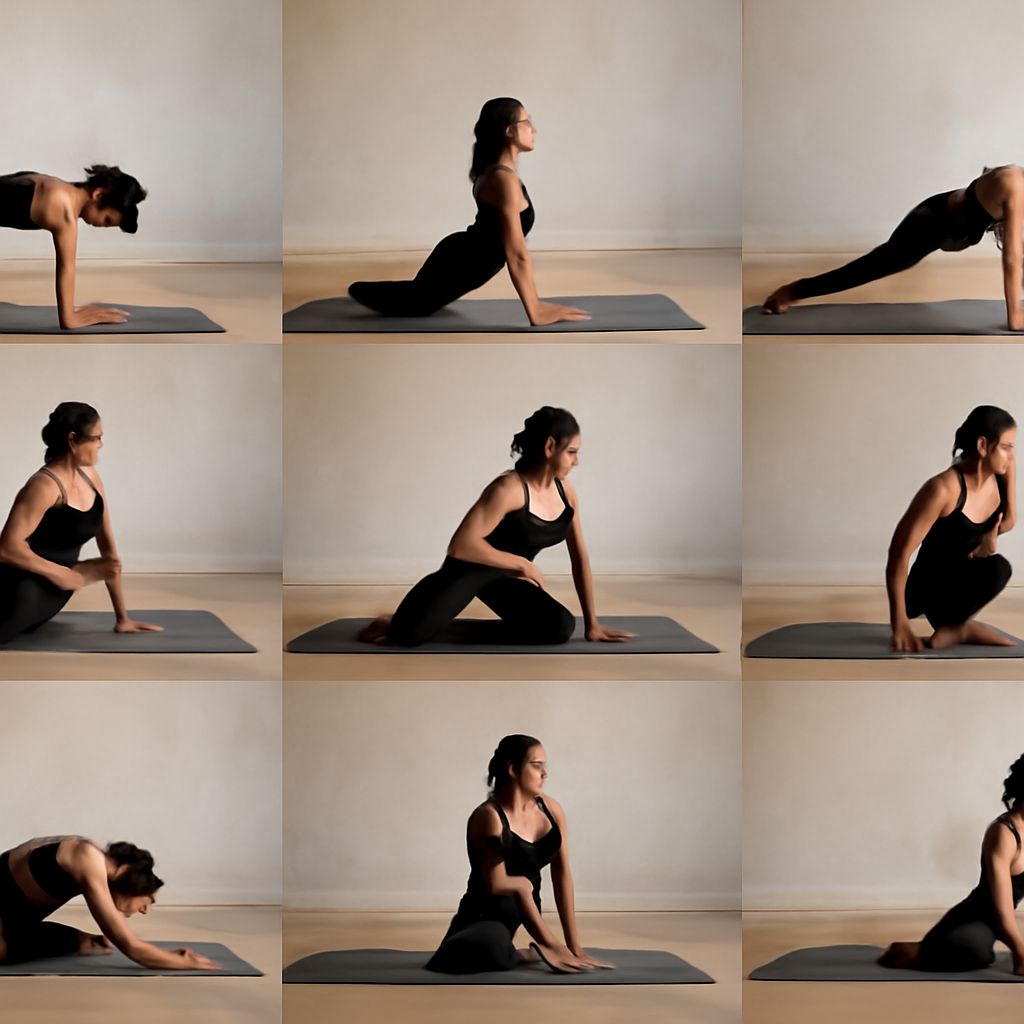
Mobility Stretches for a More Comfortable Daily Routine
Want a simple way to move your whole body when you have been sitting or before a workout? Try this whole-body mobility session: start with easy marching, then use controlled, moving stretches for your ankles, hips, spine, and shoulders. Allow about 12 to 15 minutes, move at a comfortable pace, and use a chair for support.
The aim is to explore positions you can control, not to force a joint as far as it can go. Active mobility uses your muscles to move through a range of motion; passive flexibility describes how far a joint can be moved with outside help, such as a hand or gravity. This session emphasizes movement you can guide and reverse yourself.
Full body mobility routine: prepare and move
You need a clear patch of floor, a stable chair or counter, and comfortable clothes. Complete one round of the whole-body mobility sequence in the order below. Move slowly enough to notice where each repetition begins and ends. Breathe normally throughout, and use a smaller range if a position feels strained. Stop a movement that causes pain. Use this mobility practice at home with a stable support within reach.
A few minutes of easy walking or marching make a useful beginning. The American Heart Association recommends warming up gradually before more demanding activity; its guidance suggests five to ten minutes of easier movement before a workout. For this stand-alone session, march gently for two minutes, swinging your arms naturally. If you are about to exercise hard, extend the easier activity and build gradually toward your workout pace.
This full body mobility routine uses mobility stretches as moving repetitions rather than long holds. Treat each return to the starting position as part of the exercise.
Start with ankles and hips
Ankle rocks: 8 repetitions per side. Stand facing a counter with your hands resting lightly on it. Put one foot a short step forward, keep that heel down, and gently bend the front knee over the toes. Shift back to the starting position, then repeat. Your knee travels forward only as far as the heel stays comfortably planted. Switch feet. If balance is difficult during this mobility practice, place both hands on the support and shorten the step.
Standing knee lifts: 6 per side. Stand tall beside the chair, with one hand on its back. Lift one knee a comfortable distance, pause briefly, and lower the foot under control. Alternate sides. Keep your trunk upright rather than leaning backward to lift higher. A smaller lift is useful; you can also tap the lifted foot down between repetitions for balance.
Supported hip hinges: 8 repetitions. Stand a little away from the counter, feet about hip-width apart, and rest your hands on it. Soften your knees, send your hips backward, and incline your torso forward as one unit. Press through your feet to stand. Imagine closing a drawer with your hips. Keep the movement modest enough that your back does not round to reach farther. This moving stretch for hip mobility also reaches the backs of the legs.
Add the spine and shoulders
Chair-supported knee bends: 8 repetitions. Stand in front of the chair with feet comfortably apart. Reach your hips back toward the seat, bend your knees, and stand again. Touch the chair lightly if it helps you judge depth; you may sit fully and stand if that is more comfortable. Let your knees follow the direction of your toes. These mobility movements connect ankle, knee, and hip motion in an everyday pattern.
Seated upper-body turns: 5 per side. Sit toward the front of the chair with feet planted and arms crossed loosely over your chest. Turn your rib cage gently to one side, return to center, then turn the other way. Keep both sitting bones on the chair and let your eyes follow the turn. Avoid pulling yourself around with your hands. The range may be small; a smooth turn and return matter more than looking behind you.
Shoulder circles and arm reaches: 5 each way, then 6 reaches. Stand or sit tall and roll your shoulders forward five times and backward five times, keeping your arms relaxed. Next, raise both arms forward to a comfortable height and lower them slowly. These stretches for joint mobility can be done seated if standing is tiring. If overhead reaching feels awkward, stop below shoulder height or move one arm at a time. The NHS warm-up guide also uses shoulder rolls and knee bends as controlled warm-up movements.
Together, these stretches for mobility let you practice moving without holding an extreme position. This whole-body mobility sequence also lets you compare control on each side. You should be able to reverse each repetition without a sudden jerk. Let each side work within its comfortable range.
Fit the session into your day
Before a walk, run, or strength session, make your mobility work a bridge into the activity: start with easy marching, choose the ankle rocks, knee bends, and shoulder reaches, then begin the activity at a lighter pace. Before lifting, add a few easy repetitions of the actual lift.
On a desk-heavy day, use the whole-body mobility sequence as a short break, or divide it into a morning lower-body set and an afternoon upper-body set. Try two or three sessions per week and adjust to fit your other activity.
Mobility stretches are distinct from a long passive hold: the emphasis here is on a controlled return as well as a comfortable reach. If time is limited, choose a few active stretches for mobility that suit your next activity rather than rushing all six.
Over the next few weeks, notice whether you can complete each repetition smoothly, breathe normally, and return to the starting position without losing balance. When one round feels comfortable and controlled across several sessions, add two repetitions per movement or try a second round. Keep the smaller dose if your form becomes less steady.