How to Stretch Hamstrings in Three Comfortable Positions
It is tempting to think that a hamstring stretch works only if you can touch your toes. In fact, learning how to stretch the hamstrings starts with finding gentle tension at the back of the thigh, wherever your hands happen to reach. A small movement at the hip can be more informative than a large reach made by rounding the back.
These exercises for stretching the hamstrings use the floor, a chair and a standing position. Each gives you a way to adjust the distance and intensity, so you can choose a position that fits your space and current range of motion.
Hamstring Stretch Exercises to Try
Hamstring stretch exercises target a group of muscles along the back of the thigh. They cross the hip and knee, helping move both joints. In each position below, the aim is a mild pull along the back of the thigh while you breathe normally. Move into the position gradually and hold without bouncing.
Before you begin, walk or march gently for five to ten minutes, or stretch after activity when you are warm. Mayo Clinic recommends holding a comfortable stretch for about 30 seconds and stopping if it hurts. You do not need to reach the same angle on both sides; start with the position each leg allows.
1. Lying on Your Back
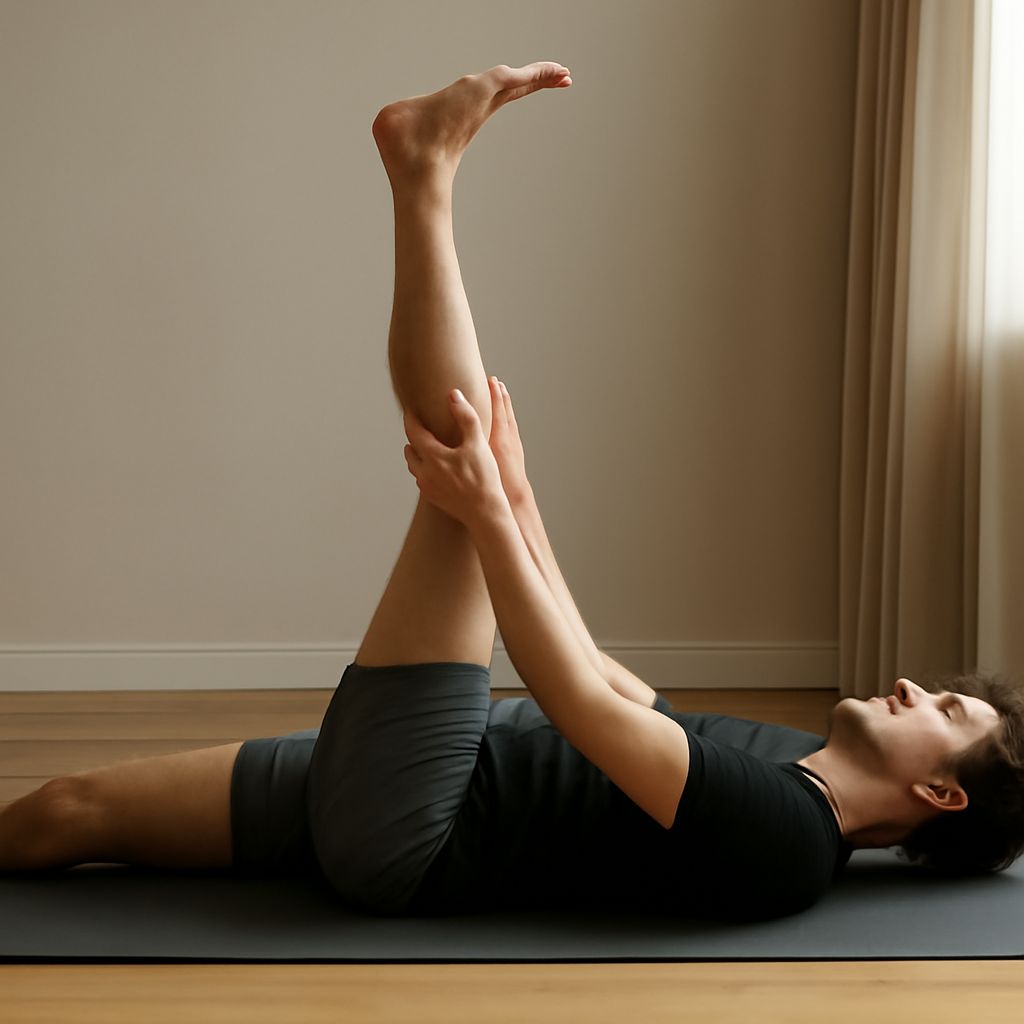
Lie on your back with both knees bent and your feet on the floor. Lift one thigh toward your chest and hold it behind the thigh with both hands. Slowly straighten that knee until you feel a gentle pull. Keep the other foot down and allow your shoulders to rest on the floor.
To reduce the sensation, bend the raised knee more or move the thigh slightly away from your chest. To increase it, straighten the knee a little farther or bring the thigh closer, without tugging. A towel looped around the thigh can extend your reach if your hands cannot comfortably hold it. The American Academy of Orthopaedic Surgeons describes this supported position in its hip-conditioning program.
This is one way to learn how to stretch your hamstrings without balancing. It is a supported approach to hamstring stretching when standing is uncomfortable. Keep your breathing easy and release the leg slowly before changing sides. Your raised leg does not have to point straight up for the position to be effective.
2. Seated on a Chair
Sit near the front edge of a stable chair. Place one heel on the floor in front of you, with that leg nearly straight and the toes pointing upward. Keep the other foot planted under its knee. Sit tall, then tip forward from your hips until you feel a mild pull behind the extended thigh.
Rest your hands on your bent leg or the chair for support. To make this ham string stretch gentler, bend the extended knee slightly and sit a little farther upright. To deepen it, tip forward a little more from the hips while keeping your back comfortably long. You do not have to grab your foot.
Notice whether the hamstrings stretch as your hips tip forward. If your shoulders round and your hands move closer to the toes while the feeling in the thigh stays unchanged, return upright and try a smaller hip movement. The useful motion may be only an inch or two.
3. Standing With a Low Support
Stand facing a low, stable step and place one heel on it. Keep the supporting foot flat, stand tall and hold a wall or railing for balance. With a soft knee on the raised leg, tip your pelvis and torso slightly forward together until you feel tension in the back of that thigh.
A lower step or a little more knee bend reduces the pull. To increase it, straighten the raised knee slightly or tip forward a little farther, keeping the support secure. Avoid locking the knee or forcing your chest toward the foot. Step down carefully before changing legs.
If balance absorbs your attention, the chair or floor version may be easier to control. Choose the way of stretching your hamstrings that lets you remain steady. You can use the same gentle approach to stretching hamstrings in any of the three positions; the support changes, but the feeling you seek remains a mild pull rather than pain.
Put the Positions Into a Short Routine
Choose one position and practice it on each side. The best way to stretch your hamstrings is the version you can adjust comfortably. Hold for about 30 seconds, release slowly and repeat once if comfortable. On another day, try a second position to see which lets you relax and adjust most easily. You can include these hamstring flexibility exercises two or three days a week, or after a workout.
When deciding how to stretch hamstrings, use your breath and the quality of the sensation as guides. If you are holding your breath or bracing hard, ease out a little. A steady, comfortable pull gives you time to observe the position; bouncing makes it harder to judge how far you have moved.
These hamstring stretching exercises can also be adjusted from one day to the next. A shorter range on one day simply means beginning from a different point. As the position becomes familiar, you may be able to move farther while maintaining the same relaxed control.
Notice the Signal and Adjust
Stop if you feel sharp pain, tingling, numbness or a sensation traveling down the leg. Come out of the position rather than pushing through it. If symptoms persist or you have a recent injury, ask a health professional or physical therapist for guidance before continuing.
A practical sign that you have gone too far is a rounded back or held breath accompanying a strained pull. Back off, soften the knee and begin the movement again from the hip. The correction is working when you can breathe easily and feel a gentle stretch behind the thigh without forcing the position.