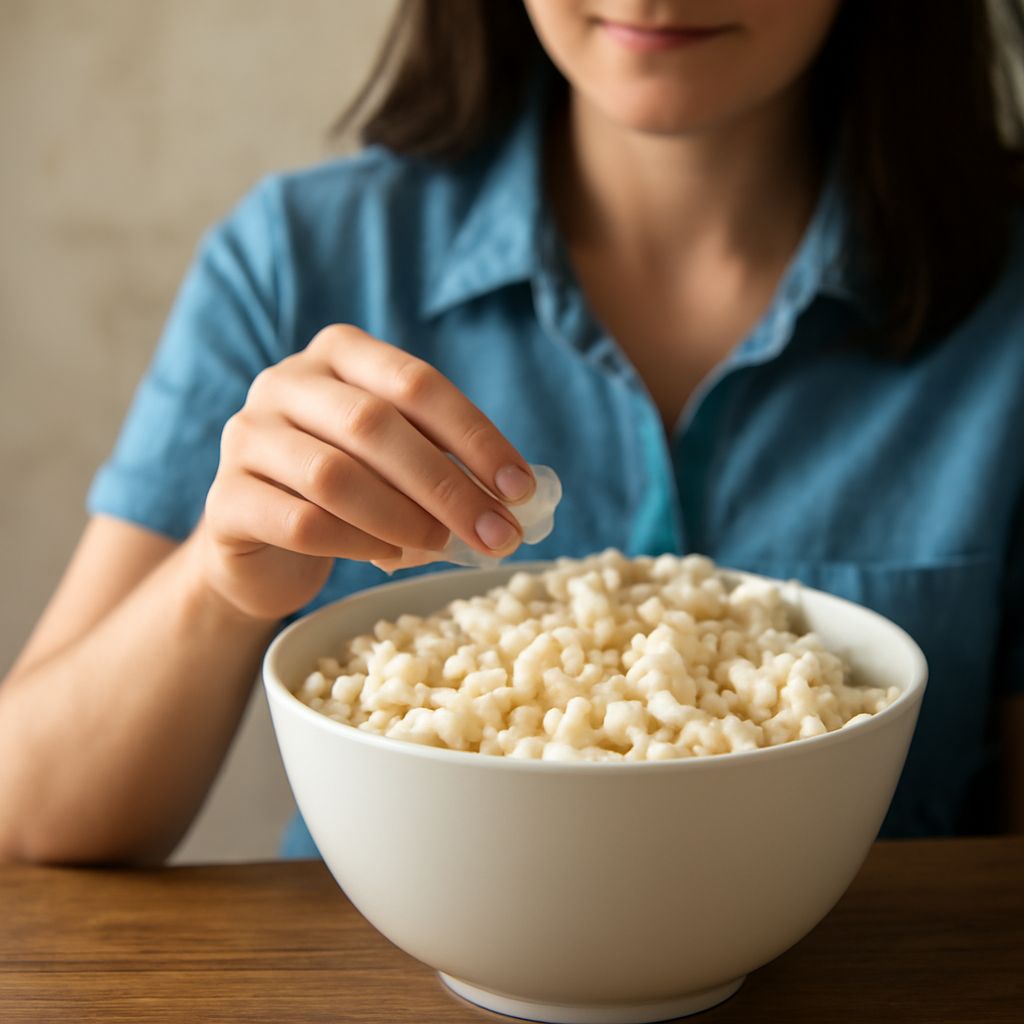
Calories in Plain Popcorn: Your Complete Carb and Calorie Breakdown
You reach for popcorn as the “healthy snack” and then wonder if you’re making a mistake. The calories in plain popcorn are far lower than the movie-theater buttered version you’re used to, but what about carbs in air popped popcorn and the calories in the homemade version you’re thinking of making? Homemade popcorn calories depend entirely on whether you’re using oil and how much, while air-popped is the lightest option available. And if you’re counting net carbs, knowing how many carbs in a cup of popcorn matters because this grain-based snack has a higher carbohydrate content than most vegetable alternatives.
This guide gives you the actual numbers for plain, air-popped, and homemade versions, along with a realistic picture of what a typical portion looks like in your hand versus on a label.
Calories in Plain Air-Popped Popcorn
Air-popped popcorn — made with no oil — is about as low-calorie as a grain-based snack gets. One cup of popped popcorn (roughly 8 g) delivers:
- Calories: 31 kcal
- Carbohydrates: 6.2 g
- Fiber: 1.2 g
- Net carbs: 5 g
- Protein: 1 g
- Fat: 0.4 g
A realistic snack portion is three to four cups, which brings the total to about 93–124 calories. That’s quite modest for a snack that takes several minutes to eat and provides genuine satiety from fiber and volume.
Carbs in Air Popped Popcorn vs Other Grain Snacks
The carbs in air popped popcorn are meaningful if you’re tracking net carbs on a low-carb diet. Three cups of popped corn delivers about 18 g carbs total, with 3.6 g fiber, leaving roughly 14–15 g net carbs — which pushes the boundaries of a strict keto intake for one snack. By comparison, three cups of puffed rice cakes (same volume) contain around 21 g carbs with less fiber. Popcorn’s fiber content gives it a slight advantage.
Homemade Popcorn Calories With Oil
Homemade popcorn calories rise substantially when you add oil for stovetop popping. One tablespoon of coconut or olive oil adds 120 calories to the total batch. If a batch yields four cups of popped corn, the oil alone adds 30 calories per cup — nearly doubling the per-cup total to about 60 kcal.
Calories in homemade popcorn also depend on whether you season with butter (one tablespoon = 100 kcal), salt (zero calories), nutritional yeast (45 kcal per 2 tablespoons, plus protein), or flavored coatings.
How Many Carbs in a Cup of Popcorn by Type
- Air-popped, no oil: 6.2 g carbs, 1.2 g fiber
- Stovetop with 1 tbsp oil (4-cup batch): 6.2 g carbs + trace from oil
- Lightly salted microwave: 6–8 g carbs depending on brand (some add starch)
- Movie theater “butter” popcorn: 8–10 g carbs per cup, plus 10–15 g fat per cup
Popcorn as a Weight-Loss Snack
The low calorie density of air-popped popcorn makes it a useful tool for high-volume eating during a calorie deficit. Three cups of popcorn at 93 calories has far more physical volume than 93 calories of any nut, chip, or cracker. Volume eating helps manage hunger because stomach stretch receptors signal fullness based on physical volume, not just calories.
The catch: most commercially available popcorn adds significant oil, butter, or flavoring. Microwave “light” varieties run 20–30 kcal per cup. Movie theater large popcorn (approximately 20 cups) with butter can top 1,500 calories — not the innocent snack it appears to be at the concession stand.
Key takeaways: Calories in plain popcorn start at just 31 kcal per cup air-popped, making it one of the most calorie-efficient whole-grain snacks available. How many carbs in a cup of popcorn sits at about 6 g total, or 5 g net, which is manageable for most moderate low-carb approaches. Homemade popcorn calories stay lowest when you pop with minimal oil and season with salt, spices, or nutritional yeast instead of butter.
Related Posts
How to Make Pancakes: A Complete Guide
Fat Guy in a Little Coat Gif and Nutritional Insights