Low Calorie Noodles and How to Lose Upper Body Fat With Smart Eating
You love a big bowl of noodles, but you’re also trying to make progress on trimming down your midsection and upper body. Good news: you don’t have to give up your pasta nights. Low calorie noodles are a genuine solution — not just a diet gimmick — and when paired with the right foods, they can support your goal of losing upper body fat without leaving you hungry.
This guide covers how to lose upper body fat through dietary choices, highlights foods high in fiber low in carbs that complement a low-calorie eating pattern, compares the lowest calorie noodles on the market, and explains the nutrition science behind how to reduce upper body fat by managing your overall calorie intake.
Understanding Upper Body Fat and Calories
Upper body fat — around the arms, chest, back, and abdomen — is influenced primarily by overall calorie balance. You cannot spot-reduce fat from specific body regions through diet alone, but creating a consistent calorie deficit causes your body to draw from fat stores throughout, including the upper body. For most people, a deficit of 300–500 calories per day produces 0.5–1 lb of fat loss per week — a sustainable, evidence-backed rate.
Noodles are a starchy carbohydrate, meaning traditional pasta can be calorie-dense relative to portion size. A single cup of cooked spaghetti contains around 220 calories. Switching to low calorie noodle alternatives lets you eat satisfying volumes while keeping calories controlled — a key strategy when learning how to reduce upper body fat through diet.
The Lowest Calorie Noodles Available
Not all low-cal noodle options are created equal. Here’s how the most popular varieties compare per 100 g (cooked or prepared):
- Shirataki noodles (konjac): 8–10 calories, 0 g net carbs. These translucent noodles are made from glucomannan fiber and are essentially water. They have a neutral flavor and absorb sauces well. Rinse thoroughly and dry-fry in a hot pan for 2–3 minutes to improve texture before using.
- Zucchini noodles (zoodles): 18–20 calories, 2 g net carbs. Spiralized raw zucchini makes an excellent fresh noodle. Lightly salt and rest for 10 minutes to draw out excess moisture before serving.
- Hearts of palm noodles: 20–25 calories, 2 g net carbs. Made from the core of palm trees, these have a mildly tangy flavor and a texture closer to al dente pasta.
- Edamame or black bean pasta: 100–120 calories, 11–14 g net carbs, but 11–14 g protein. Not the lowest calorie noodles, but the protein content significantly increases satiety.
Foods High in Fiber Low in Carbs to Pair With Your Noodles
Building meals around foods high in fiber low in carbs maximizes satiety while minimizing caloric density. The fiber slows digestion, prolongs fullness, and helps regulate blood sugar. Top pairings for noodle dishes include:
- Broccoli: 5 g fiber per cup, only 55 calories and 6 g net carbs
- Spinach: 3.7 g fiber per 100 g, approximately 23 calories
- Mushrooms: 1 g fiber per 100 g, only 22 calories — excellent umami flavor that reduces the need for high-calorie sauces
- Cabbage: 2.5 g fiber per 100 g, approximately 25 calories — shreds well into stir-fry noodle dishes
- Bell peppers: 2 g fiber, 31 calories per 100 g, and bright color that makes meals visually appealing
Sample Low Calorie Noodle Bowl Recipe
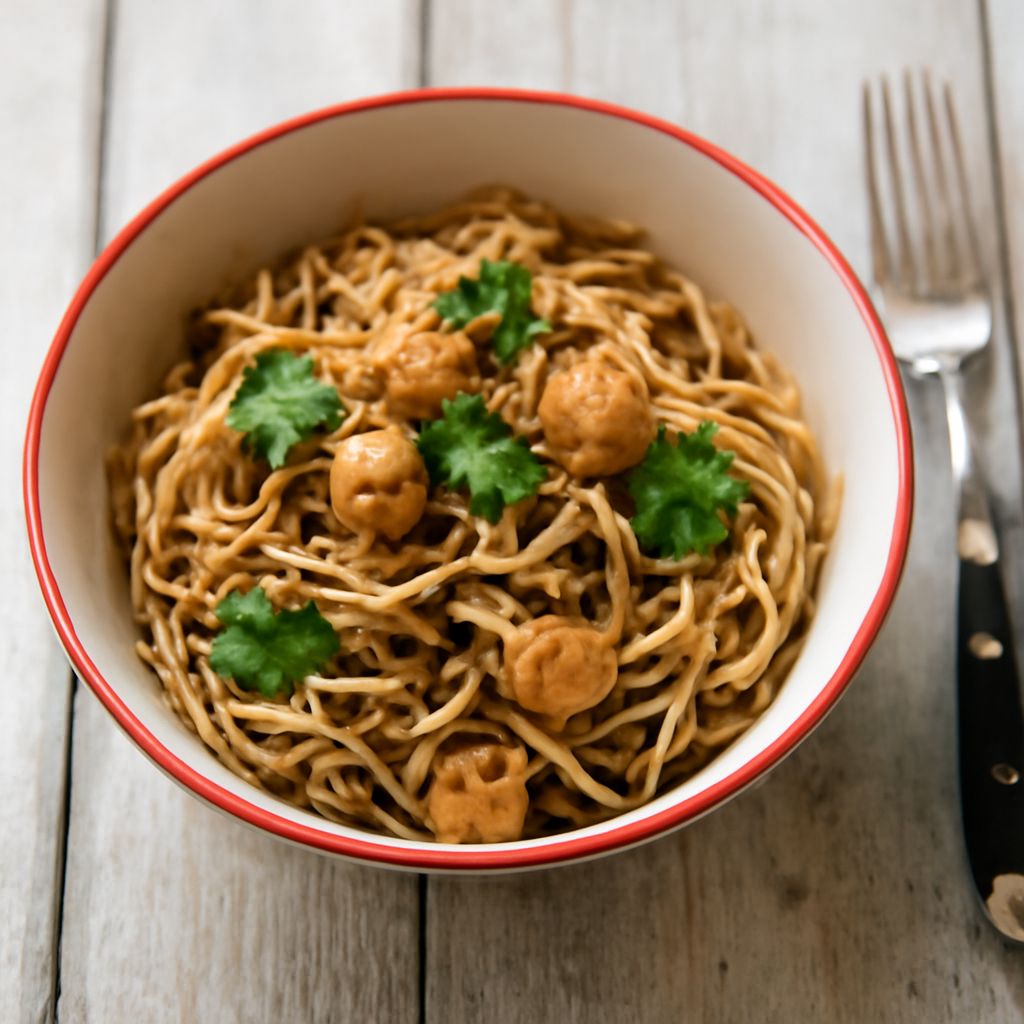
This shirataki stir-fry takes 15 minutes and comes in under 300 calories:
- Rinse and dry-fry one package (200 g) shirataki noodles in a non-stick pan on medium-high for 3 minutes per side.
- Add 1 tsp sesame oil and 150 g shrimp or firm tofu — cook 2–3 minutes.
- Toss in 1 cup broccoli florets and 1/2 cup sliced mushrooms — stir-fry 4–5 minutes.
- Season with 1 tbsp low-sodium soy sauce, 1 tsp rice vinegar, and a pinch of chili flakes.
- Garnish with sliced green onion and sesame seeds.
Total: approximately 280 calories, 28 g protein, 8 g net carbs.
The Role of Protein in Losing Upper Body Fat
Protein is the most satiating macronutrient, and it also preserves lean muscle mass during a calorie deficit. When you reduce upper body fat through caloric restriction, consuming adequate protein (0.7–1 g per pound of body weight) ensures that a greater proportion of weight lost is fat rather than muscle. Pairing low calorie noodles with protein-rich additions — shrimp, chicken breast, tofu, edamame, or a soft-boiled egg — transforms a side dish into a complete, fat-loss-friendly meal.
Next Steps
Start by substituting shirataki or zucchini noodles for regular pasta in two meals per week. Track your calorie intake for those days to confirm you’re achieving the 300–500 calorie deficit needed for steady fat loss. Gradually expand your repertoire of high-fiber, low-carb vegetables to add variety and nutritional breadth to your noodle bowls. As your eating habits stabilize, combine dietary changes with upper-body resistance training to accelerate body composition improvements.