What Does 10 Body Fat Look Like? A Visual Guide by Percentage
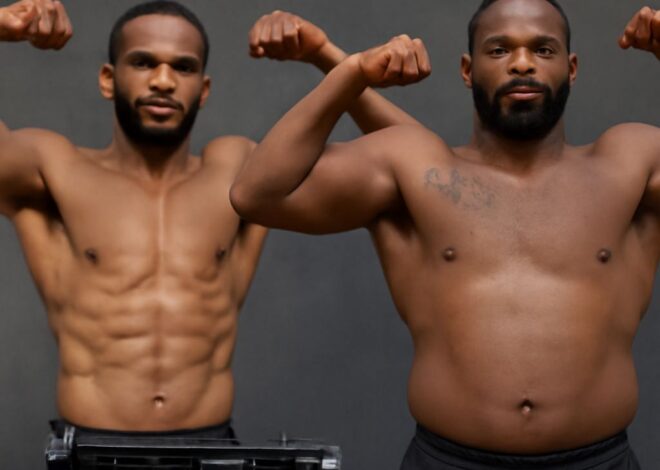
You’ve been tracking your diet and training for months and you want to know where you actually stand. What does 10 body fat look like in practice — not as a DEXA scan number, but on a real body, in natural light, without a pump? The visual markers at 10% are specific: visible abdominal separation in all lighting conditions, defined intercostals (the muscles between the ribs), and surface vascularity on the forearms and upper body even at rest. It’s a lean state that takes deliberate effort to reach and is difficult for most people to maintain year-round.
Knowing what does 15 percent body fat look like helps frame the progression — 15% is athletic without being extreme, and the difference between 15% and 10% is often more dramatic than the five-point gap suggests. Understanding what does 10% body fat look like versus higher percentages, how body fat visual cues change across ranges, and what body fat percentages look like on different frames gives you a realistic roadmap. Whether you’re trying to get there or just curious about where you currently sit, this guide uses real anatomical markers instead of vague comparisons.
How Body Fat Percentage Is Measured
DEXA (dual-energy X-ray absorptiometry) scans are the most accurate commercially available method, with a margin of error around 1–2%. Hydrostatic (underwater) weighing and air displacement plethysmography (the Bod Pod) are similarly accurate. Skinfold calipers in the hands of an experienced technician produce results within 3–4% of DEXA when using a multi-site protocol. Bioelectrical impedance analysis — common in smart scales — has a margin of error of 3–8% and is significantly affected by hydration status. Knowing your measurement method’s limitations matters when you’re making decisions based on a specific number like 10%.
What 10% Body Fat Looks Like on Men
Muscle Definition at 10%
At 10% body fat, a male physique shows clear separation between all major muscle groups — quads, hamstrings, glutes, chest, shoulders, and arms all have defined borders even without being flexed. The abdominals are visible with clearly defined rows; obliques show when you twist or contract. Serratus anterior (the finger-like muscles along the rib cage) and intercostals are typically visible. Muscle size matters here too: a 160-pound man at 10% looks different from a 200-pound man at 10% — both are defined, but the larger frame carries more visual muscle mass at the same percentage.
Face and Vascularity at 10%
Facial features sharpen noticeably — cheekbones become more prominent, the jawline becomes more defined, and fat around the face and neck is minimal. Forearm veins are visible and prominent, and upper arm vascularity appears during training and often at rest. Some individuals show abdominal vascularity. Skin sits closer to the muscle surface, giving a dry, conditioned appearance. Veins become visible across the chest and shoulders during exertion.
What 10% Body Fat Looks Like on Women
Why Women’s 10% Differs From Men’s
Essential fat for women is 10–13% compared to 2–5% for men. A woman at 10% body fat is at or near essential fat levels — an extremely lean state that most women in competitive athletics rarely maintain outside of competition. At this level, visible definition is extreme, menstrual irregularity is common, and hormonal health can be compromised. What female athletes call “very lean” in everyday conversation typically corresponds to 15–18% body fat, which shows clear muscle definition, athletic builds, and low visible fat without the physiological stress of sub-essential levels.
What 15% Body Fat Looks Like
For men, 15% body fat presents as a flat, athletic stomach without the separation visible at 10%. Some abdominal definition may be present, particularly in the upper abs, but the lower abdominal area typically has a soft layer. Vascularity is present during exercise but not prominently at rest. Arms, shoulders, and chest show shape and fullness without deep muscular striations. This is the range many active men maintain year-round without extreme dietary discipline. For women, 15% is a lean, athletic presentation with visible muscle tone in the legs and arms, a defined waist, and minimal excess fat.
Body Fat Percentages from 20% to 30%
At 20% body fat, men have a soft midsection without defined abs, though the body still appears athletic and fit in clothing. Muscle shape is visible in arms and legs. At 25%, the midsection carries visible softness and ab definition disappears; the body looks average in Western populations. At 30%, there is a noticeable layer of fat over most muscle groups, the face rounds, and the midsection is the dominant visual feature. For women, these thresholds produce different visual outcomes — women at 25% can still appear quite lean due to different fat distribution patterns, particularly in the hips and thighs.
How to Estimate Your Own Body Fat Visually
Compare your body to reference images using multiple data points: abdominal definition (or lack of), arm vascularity, visible shoulder caps and deltoid separations, and the way clothing fits across the chest and hips. Mirror light matters — bathroom lighting with shadow creates the illusion of more definition than actually exists. Do your assessment in natural daylight at a neutral time of day, not first thing in the morning after 16 hours of fasting, which skews results lean. For a working estimate, skinfold calipers with a standard three-site Jackson-Pollock formula give you a number within 3–4% without specialized equipment.
What It Takes to Reach and Maintain 10% Body Fat
Getting to 10% requires a consistent caloric deficit over multiple months — typically 3–6 months of structured dieting from a starting point of 15–18%. Weekly fat loss at 0.5–1 pound per week preserves muscle; faster rates result in leaner-looking but smaller physiques. Maintaining 10% long-term requires either a very high activity level or permanent attention to food intake, because the body actively works to restore fat stores through hormonal mechanisms including reduced leptin and elevated ghrelin. Most people find a maintenance range of 12–15% more sustainable and allow seasonal variation rather than trying to stay at single-digit percentages year-round.
Bottom line: The visual difference between 10% and 15% body fat is significant — full muscular definition and vascularity versus a lean but soft appearance. Getting there takes months of structured dieting, and staying there requires ongoing discipline that most people find difficult to maintain outside of competitive seasons.