Pulled Pork Calories: How Many Calories and Carbs in Pulled Pork
Pulled Pork Calories: How Many Calories and Carbs in Pulled Pork
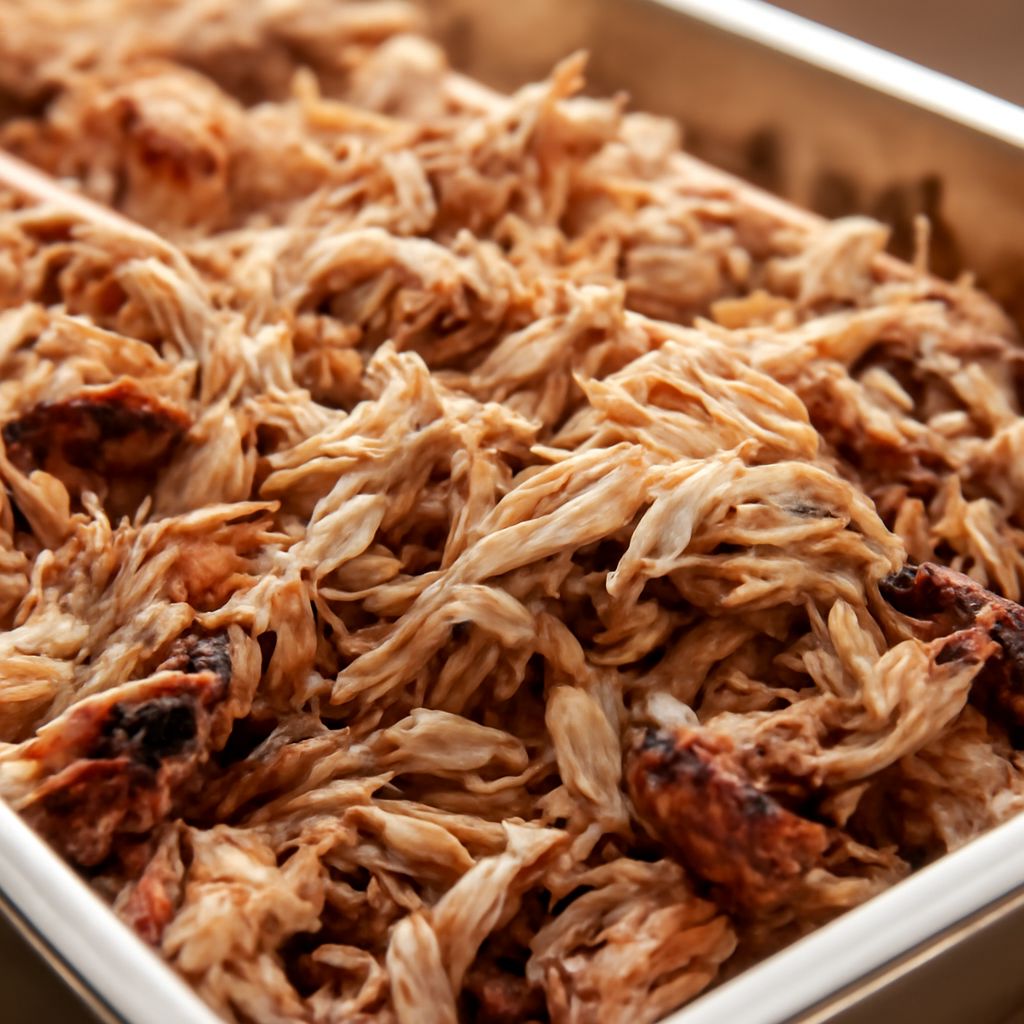
You’re at a barbecue or meal prepping for the week, and you want to know exactly where pulled pork fits in your daily intake. Pulled pork calories vary considerably based on the cut used, the cooking method, and critically — whether BBQ sauce is included. Calories in pulled pork made from pork shoulder (butt) are different from pulled pork made from tenderloin, and how many calories in pulled pork at a restaurant is usually higher than what you’d make at home.
Calories pulled pork data from tracking apps can be confusing because some entries include sauce and bun, others don’t. Carbs in pulled pork are essentially zero for plain meat but climb significantly once sauce is added. Here’s the precise breakdown so you can track and plan accurately.
Plain Pulled Pork Calories by Cut
Pork shoulder (Boston butt) is the most common cut for pulled pork. It has significant fat marbling that renders down during the long cook. Cooked, shredded pork butt (no sauce, no bun) contains approximately: 3 oz serving (85 g) — 190 to 220 calories, 20 to 23 g protein, 10 to 14 g fat, 0 g carbs. 4 oz serving (113 g) — 255 to 295 calories, 27 to 30 g protein, 14 to 18 g fat, 0 g carbs. 6 oz serving (170 g) — 380 to 440 calories, 40 to 45 g protein, 21 to 27 g fat, 0 g carbs.
Pork tenderloin pulled pork runs significantly leaner: approximately 130 to 140 calories per 3 oz serving with 22 to 24 g protein and only 3 to 5 g fat — nearly half the calories of shoulder-based pulled pork. If you’re counting calories pulled pork carefully, the cut choice is the single biggest variable.
How BBQ Sauce Adds Calories and Carbs
Carbs in pulled pork come almost entirely from sauce. A typical 2-tablespoon serving of commercial BBQ sauce contains 40 to 60 calories, 8 to 12 g of carbohydrates, and 5 to 9 g of sugar. Restaurant pulled pork is frequently sauced heavily — sometimes 4 to 6 tablespoons per serving — adding 80 to 180 calories and 16 to 36 g of carbs to what would otherwise be a nearly zero-carb protein.
Sugar-free BBQ sauce options (using erythritol or stevia as sweetener) drop carbs to 1 to 3 g per 2 tablespoons while maintaining reasonable flavor. G Hughes Smokehouse Sugar Free BBQ Sauce is one of the most widely available options and runs about 15 calories and 2 g net carbs per 2-tablespoon serving — a practical swap for low-carb meal prep.
Restaurant Pulled Pork Calories
Restaurant pulled pork is typically served with sauce already incorporated, often with a heavier hand than home cooks would use. Notable chain data: Chipotle Carnitas (the closest menu item) runs about 210 calories for a 4 oz serving. Dickey’s Pulled Pork (3 oz portion) clocks in at approximately 230 calories. A loaded pulled pork sandwich at most BBQ restaurants (bun + pulled pork + sauce + coleslaw) typically runs 650 to 950 calories — the bun and coleslaw contributing as much as the meat.
Slow Cooker vs Oven vs Smoker
Cooking method affects final fat content because the rendering process differs. Slow cooker pulled pork retains more fat in the meat because the meat sits in its own juices throughout the cook — final calorie count is higher per ounce. Smoked pulled pork loses more fat to dripping and evaporation during the long, dry cook (8 to 16 hours at 225 to 250°F) — finishing slightly leaner. Pressure cooker pulled pork is similar to slow cooker in retention. Straining the cooking liquid and skimming fat before shredding can reduce calories by 50 to 80 per serving.
Pulled Pork in Low-Carb and High-Protein Diets
For low-carb eating: plain pulled pork from pork shoulder with sugar-free sauce is an excellent option — high protein, moderate fat, minimal carbs. A 5 oz serving with 1 tablespoon of sugar-free sauce lands at approximately 290 to 330 calories, 33 to 38 g protein, and 2 to 3 g carbs. This makes it one of the more satisfying low-carb meals available without requiring unusual ingredients or preparation.
For high-protein meal prep: pulled pork keeps well in the refrigerator for 4 to 5 days and freezes for up to 3 months without texture degradation. A batch cook of 5 to 6 pounds of pork shoulder yields 15 to 18 servings and takes approximately 8 minutes of active preparation for slow cooker or oven methods. At 3 to 4 oz per meal serving, that’s a full week of high-protein lunches or dinners with minimal daily effort.
Pulled Pork Sandwich Calories
A whole sandwich changes the calorie calculation significantly. Add a brioche bun (250 to 300 calories, 40 to 45 g carbs), 4 oz pulled pork (260 calories, 0 g carbs), 2 tbsp BBQ sauce (50 calories, 10 g carbs), and 3 tbsp coleslaw (50 calories, 6 g carbs): total approximately 610 to 660 calories and 56 to 61 g carbs. A low-carb version using a lettuce wrap instead of a bun drops the carb count by 40 g and the calorie count by 250 to 300 calories.
Next Steps
For home cooking, choose pork shoulder for flavor and traditional texture or pork tenderloin for a leaner version, and always weigh your serving after shredding for accurate calorie tracking. Portion the cooking liquid off before shredding to control fat retention. Build a standard entry in your tracking app for your homemade recipe with the specific ingredients you use — it takes five minutes once and saves you from using generic database entries that can be off by 20 to 40% in either direction.